







Introduction
Modern lifestyles have changed the way people work, travel, and relax. From office jobs and online learning to streaming entertainment and long commutes, sitting has become a major part of everyday life. While sitting itself is a natural body position, spending long, uninterrupted hours in a chair can gradually affect nearly every organ system. The topic Wellhealthorganic.com:Health-Hazards-of-Prolonged-Sitting has gained significant attention because medical experts now recognize prolonged sitting as a major contributor to chronic diseases and reduced quality of life.
Research suggests that even individuals who exercise regularly may still face health risks if they remain sedentary for most of the day. Understanding these risks is the first step toward making healthier lifestyle choices. This detailed guide explains how prolonged sitting impacts your body, why movement is essential, and what practical steps you can take to protect your long-term health. By making small but consistent changes, anyone can reduce the negative effects of a sedentary lifestyle and enjoy better physical and mental well-being.
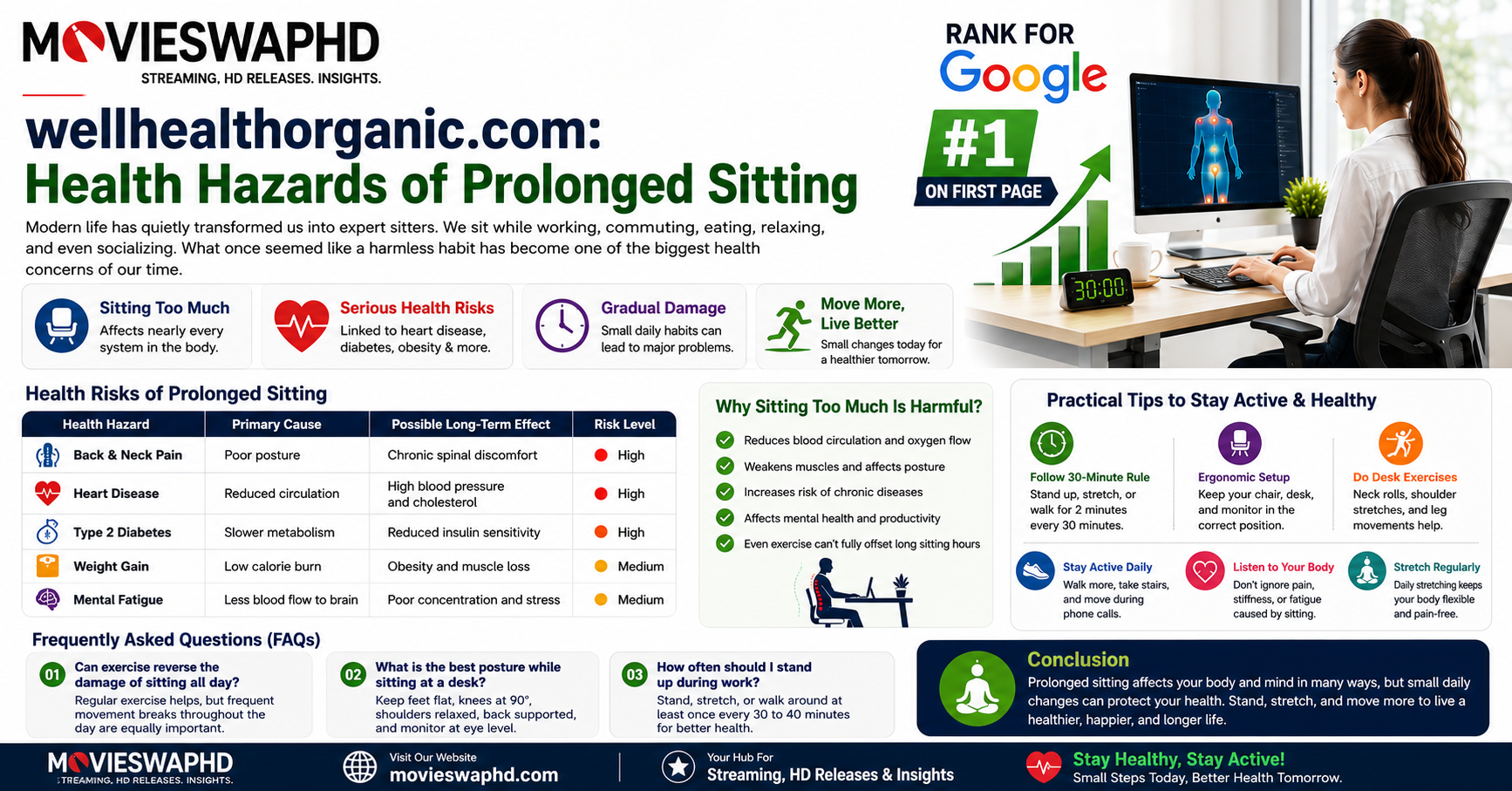
Health Risks Overview
| Health Hazard | Main Cause | Long-Term Effect | Prevention |
|---|---|---|---|
| Back & Neck Pain | Poor posture | Chronic pain and spinal issues | Ergonomic seating, stretching |
| Heart Disease | Reduced circulation | High blood pressure, stroke risk | Walk every 30 minutes |
| Type 2 Diabetes | Low muscle activity | Insulin resistance | Regular movement and exercise |
| Weight Gain | Low calorie burn | Obesity | Healthy diet and active lifestyle |
| Weak Muscles | Physical inactivity | Loss of strength and balance | Strength training |
| Poor Blood Circulation | Sitting too long | Swollen legs and blood clots | Frequent walking |
| Mental Fatigue | Reduced brain oxygen | Low productivity | Movement breaks |
| Poor Posture | Slouching | Spinal misalignment | Correct sitting posture |
| Joint Stiffness | Lack of movement | Reduced flexibility | Daily stretching |
| Reduced Life Expectancy | Chronic inactivity | Multiple chronic diseases | Active daily routine |
Wellhealthorganic.com:Health-Hazards-of-Prolonged-Sitting
The discussion around Wellhealthorganic.com:Health-Hazards-of-Prolonged-Sitting highlights one of today’s most overlooked health concerns. Humans evolved to walk, climb, lift, and stay physically active throughout the day. However, modern technology has dramatically reduced daily movement. Office employees often spend eight to ten hours seated, students attend online classes while sitting, and many people relax by watching television or scrolling through smartphones after work. This continuous inactivity slows important bodily functions that depend on movement. Blood circulation decreases, muscles remain inactive, joints stiffen, and calorie burning drops significantly.
These changes may seem minor initially, but over months and years they can contribute to obesity, diabetes, heart disease, poor posture, and chronic pain. Many people mistakenly believe that going to the gym for one hour offsets an entire day of sitting, yet research indicates that prolonged uninterrupted sitting still has harmful effects. Understanding these risks encourages healthier habits such as standing regularly, stretching, walking, and creating a more active daily routine.
Effects on the Spine, Neck, and Body Posture
One of the earliest consequences discussed in Wellhealthorganic.com:Health-Hazards-of-Prolonged-Sitting is poor posture and spinal discomfort. Sitting places greater pressure on the spinal discs than standing, especially when posture is incorrect. Leaning toward a computer screen or looking down at a smartphone forces the neck into an unnatural forward position, increasing strain on muscles and ligaments. Over time, this may lead to chronic neck pain, shoulder stiffness, tension headaches, and lower back problems.
Tight hip flexors and weak abdominal muscles further reduce spinal stability, making good posture difficult to maintain. Many office workers experience these symptoms daily without realizing that prolonged sitting is the primary cause. Proper ergonomic adjustments, including an adjustable chair, lumbar support, monitor positioned at eye level, and feet resting flat on the floor, can significantly reduce stress on the spine. Regular stretching and standing breaks also help maintain flexibility, improve posture, and reduce the likelihood of developing long-term musculoskeletal disorders.
Cardiovascular Problems Caused by Sitting Too Long
According to information surrounding Wellhealthorganic.com:Health-Hazards-of-Prolonged-Sitting, the cardiovascular system suffers considerably when movement decreases. Walking and regular muscle contractions help pump blood efficiently throughout the body. During extended sitting, circulation slows, allowing blood to pool in the legs while the heart works harder to maintain adequate blood flow. This reduced circulation may contribute to elevated blood pressure, unhealthy cholesterol levels, inflammation, and increased risk of heart disease.
Studies have shown that individuals who sit for prolonged periods have a higher likelihood of experiencing cardiovascular complications, regardless of their body weight. In severe cases, long periods of inactivity may also increase the risk of deep vein thrombosis (DVT), where blood clots form in the legs. Fortunately, preventing these complications does not require strenuous exercise. Standing every thirty minutes, walking for a few minutes, climbing stairs, or simply stretching the legs regularly can dramatically improve blood circulation and reduce cardiovascular risks while supporting overall heart health.
Increased Risk of Type 2 Diabetes and Metabolic Disorders
Another significant concern addressed in Wellhealthorganic.com:Health-Hazards-of-Prolonged-Sitting is the effect of inactivity on metabolism. Muscles are major consumers of glucose, but during prolonged sitting they become inactive and absorb less sugar from the bloodstream. As a result, insulin becomes less effective, causing blood sugar levels to rise gradually. Over time, this reduced insulin sensitivity increases the likelihood of developing Type 2 diabetes and metabolic syndrome. Individuals with poor dietary habits face an even greater risk because excess calories are stored rather than burned.
Furthermore, prolonged sitting lowers the body’s metabolic rate, meaning fewer calories are burned throughout the day. This contributes to fat accumulation, especially around the abdomen, which is closely linked with diabetes and heart disease. Breaking up sitting time with short walks after meals, light stretching, standing while working, and maintaining a balanced diet rich in vegetables, whole grains, and lean protein can significantly improve glucose control and support long-term metabolic health.
Muscle Weakness, Weight Gain, and Reduced Fitness
The topic Wellhealthorganic.com:Health-Hazards-of-Prolonged-Sitting also emphasizes how inactivity weakens important muscle groups. Sitting for extended periods reduces activation of the glutes, core muscles, thighs, and calves. Without regular use, these muscles gradually lose strength and endurance. Weak muscles reduce balance, limit mobility, and increase the likelihood of injury during everyday activities. At the same time, calorie expenditure declines because sitting requires very little energy. Excess calories consumed through food are stored as fat, leading to gradual weight gain.
Increased body fat places additional stress on joints, particularly the knees and lower back, making physical activity even more difficult. This creates a cycle where inactivity leads to weight gain, which then discourages movement. Incorporating strength training, walking, cycling, bodyweight exercises, and regular stretching into daily routines helps maintain muscle mass, improve metabolism, increase calorie burning, and support healthy body weight. Even simple lifestyle changes like walking during phone calls can make a meaningful difference.
Mental Health, Brain Function, and Productivity
Beyond physical health, Wellhealthorganic.com:Health-Hazards-of-Prolonged-Sitting explains that extended sitting can negatively affect mental well-being. Physical movement increases oxygen delivery and blood flow to the brain, helping improve concentration, creativity, and memory. When individuals remain seated for hours, mental fatigue often develops alongside reduced alertness and productivity. Many office workers experience brain fog, decreased motivation, and difficulty focusing after long periods without movement. Research also suggests that sedentary lifestyles are associated with higher rates of anxiety and depression.
Exercise stimulates the release of endorphins and other mood-enhancing chemicals that help reduce stress while promoting emotional well-being. Taking short movement breaks throughout the workday not only refreshes the body but also improves cognitive performance. Walking outdoors during lunch breaks, practicing breathing exercises, stretching between meetings, or standing while making phone calls are simple habits that improve both mental clarity and overall workplace productivity without requiring significant time or effort.
How Much Sitting Is Too Much?
Health professionals increasingly agree that spending more than eight hours sitting each day without frequent movement substantially increases health risks. The discussion within Wellhealthorganic.com:Health-Hazards-of-Prolonged-Sitting emphasizes that uninterrupted sitting is more harmful than the total amount of sitting alone. Even individuals who complete thirty to sixty minutes of exercise daily may still experience negative effects if they remain seated continuously for the rest of the day. Experts recommend standing or moving every thirty to forty minutes to restore healthy circulation and muscle activity.
Short activity breaks lasting only two to five minutes can reduce stiffness, improve metabolism, and help maintain healthy blood sugar levels. Standing desks, walking meetings, adjustable workstations, and active commuting methods are becoming increasingly popular because they reduce sedentary time. Rather than viewing exercise as a single daily event, health experts encourage incorporating movement into every part of the day. Frequent movement creates lasting health benefits that support both physical and mental wellness.
Practical Ways to Reduce the Health Risks of Prolonged Sitting
Preventing the dangers highlighted in Wellhealthorganic.com:Health-Hazards-of-Prolonged-Sitting does not require dramatic lifestyle changes. Small daily habits often produce remarkable long-term improvements. Start by following the thirty-minute rule, where you stand up, stretch, or walk briefly every half hour. Arrange your workstation ergonomically by keeping your monitor at eye level, shoulders relaxed, and feet flat on the floor. Use a supportive chair with proper lumbar support to maintain healthy posture. Consider alternating between sitting and standing if a height-adjustable desk is available.
During breaks, perform simple stretches such as shoulder rolls, neck rotations, hamstring stretches, calf raises, and hip flexor exercises to improve flexibility. Walking during phone conversations, using stairs instead of elevators, parking farther away, or taking short lunchtime walks are practical ways to increase daily activity. These consistent habits improve circulation, reduce stiffness, burn additional calories, and significantly decrease the long-term health consequences associated with prolonged sitting.

Building a Sustainable Active Lifestyle
Creating lasting protection against the problems discussed in Wellhealthorganic.com:Health-Hazards-of-Prolonged-Sitting requires building movement naturally into everyday routines. Instead of depending solely on scheduled workouts, individuals should seek opportunities to stay active throughout the day. Walking or cycling for short trips, performing household chores, gardening, playing with children, practicing yoga, or participating in recreational sports all contribute to healthier living. Employers can encourage wellness by providing standing desks, promoting walking meetings, and reminding employees to take regular movement breaks.
Families can reduce screen time by planning outdoor activities, evening walks, or weekend hikes together. Setting smartphone reminders or using wearable fitness trackers can help maintain consistent movement habits. Sustainable changes are easier to maintain than extreme fitness programs because they fit naturally into daily life. Over months and years, these habits strengthen muscles, improve cardiovascular health, enhance mental well-being, and reduce the likelihood of developing chronic diseases associated with prolonged sitting.
Conclusion
The growing awareness surrounding Wellhealthorganic.com:Health-Hazards-of-Prolonged-Sitting serves as an important reminder that our bodies are designed for movement rather than continuous inactivity. While modern work and technology often require long periods of sitting, the health risks associated with this lifestyle are too significant to ignore. Prolonged sitting affects posture, muscles, metabolism, cardiovascular health, mental performance, and overall longevity. Fortunately, these risks are largely preventable through simple lifestyle adjustments such as standing every thirty minutes,
Maintaining proper posture, stretching regularly, walking throughout the day, and engaging in consistent physical activity. Healthy habits do not require expensive equipment or complicated routines—small actions performed consistently create lasting benefits. By making movement a natural part of everyday life, individuals can improve their energy, productivity, physical fitness, and long-term health. The message behind wellhealthorganic.com is clear: every step, stretch, and movement contributes to a healthier and more active future.


